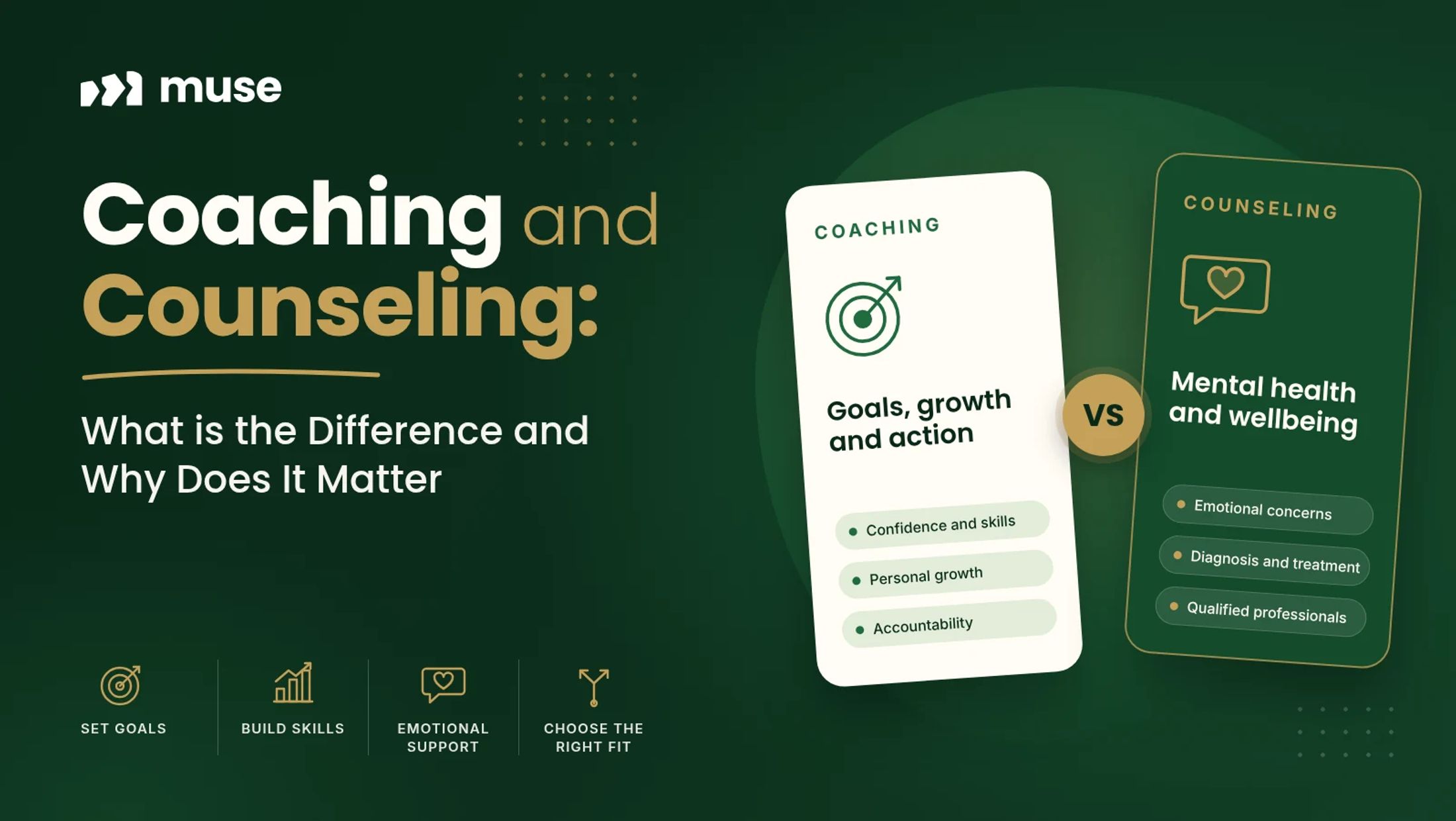
Coaching and counseling can both provide professional support when you want to make a change or work through a challenge. The two are often confused because both involve conversation, reflection, and guidance. However, they have different purposes and are designed to support different needs.
Coaching generally focuses on goals, personal growth, skills, and taking action. Counseling can support personal development and well-being while also addressing emotional and mental health concerns within a qualified professional’s scope of practice.
Understanding the difference between coaching and counseling can help you choose the right type of support for your situation. It can also help you know what to expect from a coach or counselor before you begin.
What Is Coaching
Coaching is a professional partnership that helps a person explore their goals, understand their options, and work toward personal or professional growth.
The International Coaching Federation defines coaching as a process in which a coach partners with a client to help them maximize their personal and professional potential.
A coach does not simply give instructions or make decisions for the client. Instead, coaching involves listening, asking questions, exploring ideas, and helping the client gain clarity about what they want and how they can move forward. The client remains an active part of the process and takes responsibility for their own goals and decisions.
Coaching can be useful in many areas of life. Depending on the coach's area of practice, people may seek coaching to work on:
- Confidence
- Communication
- Career goals
- Relationships
- Dating
- Personal development
- Lifestyle changes
- Decision making
- Building new skills
For people looking for support with these goals, Muse offers access to coaches who work across different areas of personal and professional growth.
The focus of coaching depends on the client's needs and the coach's area of expertise. A coaching relationship may involve identifying a goal, exploring what is holding the client back, considering different approaches, creating practical steps, and reviewing progress over time.
Coaching is also different from simply receiving advice. The coach's role is to support the coaching process rather than take responsibility for the client's choices. ICF describes the coach as an expert in the coaching process while the client remains the expert on their own life and goals.
For someone who knows they want to make a change but needs greater clarity, structure, or accountability, coaching can provide a dedicated space to work toward that change.
What Is Counseling
Counseling is a professional relationship that helps people address concerns related to mental health, wellbeing, personal development, education, and career. The American Counseling Association describes professional counseling as a process that helps people develop personal insight, skills, and strategies for dealing with problems and challenges.
Counseling can cover a wide range of concerns. A person may seek counseling when they are dealing with emotional difficulties, grief, stress, relationship problems, or other concerns affecting their well-being. Professional counselors can also work with people who want support with personal development or life decisions.
Depending on the counselor's education, training, credentials, and legal scope of practice, counseling can also include assessment, diagnosis, treatment, prevention, and referral for mental health conditions. These responsibilities are different from the role of a coach.
Counseling is not only about discussing problems. A counselor may help a person understand their thoughts, emotions, and behaviors, develop ways to manage challenges, and make changes that support their well-being.
The type of counseling someone needs depends on their concerns and the professional's area of training. For this reason, it is important to check a counselor's qualifications and the services they are trained and authorized to provide.
Coaching vs Counseling: What Is the Difference
Coaching and counseling can both help people make positive changes, but they have different purposes and professional boundaries.
If you are interested in coaching as a profession, you can also learn how to start an online coaching business.
The main differences can be understood through the following areas.
1. Focus and Goals
Coaching generally focuses on personal or professional growth. A person may work with a coach to improve confidence, communication, relationships, career development, or another specific area they want to develop.
Counseling can also support personal development, but it has a broader role in mental health and wellbeing. A counselor may help someone address emotional difficulties, psychological concerns, or other issues affecting their well-being.
2. Role of the Professional
A coach works with the client to explore goals, choices, challenges, and possible actions. The client remains responsible for their own goals and decisions.
A counselor provides professional counseling within their education, training, and legal scope of practice. Depending on their qualifications and jurisdiction, this may include assessment, diagnosis, treatment, prevention, and referral for mental health concerns.
3. Type of Support
Coaching is often chosen by people who want support with a specific goal or area of personal development. The process may involve asking questions, gaining clarity, setting goals, exploring options, and creating practical steps.
Counseling can involve exploring thoughts, emotions, experiences, and behaviors related to a person's concerns. The counselor may help the person understand and manage these concerns as part of the counseling process.
4. Mental Health Diagnosis and Treatment
Coaching is not a replacement for professional mental health care and does not provide mental health diagnosis or treatment.
Qualified counseling professionals may provide assessment, diagnosis, and treatment when these services fall within their professional training and legal scope of practice. This distinction is important when deciding what type of support is appropriate for your needs.
5. When Each May Be Appropriate
Coaching may be suitable when you want to work toward a personal or professional goal, develop a skill, improve confidence, or make a specific change in your life.
Counseling may be more appropriate when you need support with emotional or mental health concerns, particularly when assessment or treatment may be needed.
The right choice depends on what you want help with, the type of support you need, and the qualifications and scope of the professional you choose.
Coaching and Counseling Side by Side
The differences become easier to understand when coaching and counseling are compared directly.
| Area | Coaching | Counseling |
|---|---|---|
| Main focus | Personal or professional growth | Mental health, wellbeing, and personal concerns |
| Common goals | Confidence, communication, career, relationships, and personal development | Emotional concerns, mental health, coping, relationships, and wellbeing |
| Approach | Goal setting, reflection, questions, and action | Exploration, counseling support, and therapeutic approaches within professional scope |
| Client role | Sets goals and takes responsibility for decisions and actions | Works with the counselor to understand and address concerns |
| Mental health diagnosis | Not a coaching service | May be provided when within the counselor's qualifications and legal scope |
| Treatment | Not a substitute for mental health treatment | May include treatment when the counselor is qualified and authorized to provide it |
| Professional boundaries | Depends on the coach's training and area of practice | Defined by the counselor's education, training, credentials, and legal scope |
These differences do not mean that coaching and counseling never overlap. Both can involve listening, reflection, communication, and personal development. The key difference is the purpose of the support and the professional scope within which it is provided.
When Should You Consider Coaching
Coaching may be useful when you have a specific area of your life that you want to improve and would benefit from structured support.
You might consider coaching when you:
1. Want to Build Confidence
A coach can help you identify situations where you lack confidence, understand what you want to change, and work on practical ways to approach those situations.
2. Want to Improve Communication
If you want to communicate more clearly, become more comfortable in conversations, or develop stronger interpersonal skills, coaching can provide a structured space to work on these goals.
3. Have a Personal or Professional Goal
You may already know what you want to achieve but need help turning that goal into clear steps. Coaching can help you explore your options, set goals, and stay accountable to the actions you choose.
4. Want Support With Relationships or Dating
Coaching can help you work on areas such as communication, confidence, boundaries, and relationship goals. The focus depends on your situation and the coach's area of practice.
5. Want to Make a Personal Change
If you are ready to change a habit, develop a new skill, or make progress in an area of your life, coaching can give you dedicated time to reflect, plan, and take action.
Coaching is most appropriate when the support you need falls within the coach's training and professional scope. If your main concern involves a mental health condition or requires diagnosis or treatment, a qualified mental health professional may be more appropriate.
When Should You Consider Counseling
Counseling may be appropriate when you need professional support with emotional, psychological, or mental health concerns. It can also support personal development, wellbeing, education, and career concerns depending on the counselor's training and professional scope.
You might consider counseling when you:
1. Are Experiencing Emotional Distress
If difficult emotions are affecting your wellbeing or daily life, counseling can provide a professional setting to explore those concerns and develop ways to manage them.
2. Are Working Through Grief or Difficult Experiences
Counseling can provide support when you are dealing with grief, loss, or other difficult experiences. A qualified counselor can help you explore your feelings and develop ways to cope.
3. Have Concerns About Your Mental Health
If you are concerned about your mental health or believe you may need professional assessment or treatment, a qualified mental health professional can help determine what type of support may be appropriate.
4. Are Having Difficulties That Affect Daily Life
Concerns that begin to affect your relationships, work, studies, routines, or general wellbeing may be a reason to seek professional counseling.
5. Need Professional Mental Health Support
Professional counseling can include assessment, diagnosis, treatment, prevention, and referral when these services are within the counselor's qualifications and legal scope of practice.
The type of support you need depends on your situation and the counselor's area of practice. If you are unsure whether counseling is appropriate, speaking with a qualified mental health professional can help you understand your options.
Can You Use Coaching and Counseling Together
Yes, a person may use coaching and counseling at the same time or at different points in their life. The two services can address different needs, as long as each professional works within their own training and scope of practice.
For those interested in building a career in coaching, learning how to become a coach can be a separate path that requires developing the skills and knowledge needed to support clients effectively.
1. Different Goals Can Be Addressed Separately
Someone may receive counseling for an emotional or mental health concern while working with a coach on a separate goal such as communication, career development, confidence, or personal growth.
2. The Roles Should Remain Clear
A coach should not provide mental health diagnosis or treatment outside their professional scope. A counselor should also work within their education, training, credentials, and legal scope of practice.
Keeping these roles clear helps ensure that the person receives the appropriate type of support for each concern.
3. One Type of Support Does Not Replace the Other
Coaching should not be used as a replacement for professional mental health care when assessment or treatment is needed.
In the same way, someone who is looking for structured support with a personal or professional goal may find coaching more relevant to that specific goal.
The right approach depends on the person's needs, goals, and the qualifications of the professionals involved.
What's the Difference Between Coaching and Counseling in Real Life
The difference between coaching and counseling becomes clearer when you look at the reason someone is seeking support.
1. You Want to Build Confidence
Suppose you want to feel more confident when meeting people, speaking in conversations, or handling social situations. You know what you want to improve and are looking for guidance and accountability.
Coaching may be appropriate when the focus is on developing skills, changing habits, setting goals, and taking practical steps toward greater confidence.
2. You Are Dealing With Emotional Distress
Suppose you are experiencing ongoing emotional distress and it is affecting your daily life. You want professional support to understand and address what you are experiencing.
Counseling may be more appropriate because qualified counselors can provide mental health support within their professional training and scope of practice.
3. You Want Help With a Specific Personal Goal
Suppose you want to improve your communication, prepare for a career change, or make progress toward another personal goal. You may already know what you want to change but need structure and support.
Coaching can provide a space to clarify the goal, explore possible approaches, and work through practical steps.
4. You Need Support for a Mental Health Concern
If you are concerned about a mental health condition or believe you may need assessment or treatment, coaching is not a substitute for professional mental health care.
In this situation, an appropriately qualified mental health professional can help determine what type of support may be suitable.
These examples show why the choice between coaching and counseling should be based on the type of support you need rather than simply choosing one service over the other.
How to Decide Between a Coach and a Counselor
Choosing between coaching and counseling starts with understanding what you want help with. The following questions can help you identify the type of support that may fit your needs.
1. What Do You Want Help With
If you want to work toward a personal or professional goal, improve a skill, or make a specific change, coaching may be relevant.
If your main concern involves emotional wellbeing or mental health, counseling may be more appropriate.
2. Do You Need Mental Health Support
If you are experiencing significant emotional or psychological difficulties or believe you may need assessment or treatment, look for an appropriately qualified mental health professional.
Coaching should not replace mental health care when professional assessment or treatment is needed.
3. What Are the Professional's Qualifications
Before choosing a coach or counselor, check their education, training, credentials, experience, and area of practice.
For counseling, also consider whether the professional has the appropriate license or authorization required in your location.
4. Does the Professional Offer the Support You Need
Different coaches and counselors work with different areas of concern. Review the professional's services and areas of expertise to make sure they match what you want help with.
You can explore the available coaches to find someone whose experience and coaching focus match the type of support you are looking for.
5. Are You Clear About the Professional's Role
A coach should work within the boundaries of coaching and refer you to an appropriate professional when your needs fall outside their scope.
A counselor should also work within their education, training, credentials, and legal scope of practice.
Taking these points into account can help you choose support that matches your goals and needs.
Why Does the Difference Between Coaching and Counseling Matter
Understanding the difference between coaching and counseling can help you choose support that matches your needs.
1. It Helps You Choose the Right Type of Support
Coaching and counseling can address different needs. Knowing what each service is designed to provide can help you look for a professional with the right experience and training.
2. It Sets Clear Expectations
Coaching may focus on goals, personal growth, skills, and action. Counseling can address emotional and mental health concerns as well as personal development and wellbeing. Knowing this difference can help you understand what to expect from each professional relationship.
3. It Helps You Understand Professional Boundaries
Coaches and counselors have different professional roles and responsibilities. A coach should work within their area of training and refer a client to an appropriate professional when their needs fall outside that scope.
Counselors also work within their education, training, credentials, and legal scope of practice.
4. It Can Help You Seek Support at the Right Time
You do not need to choose a service based only on its name. Consider the reason you are seeking help, the type of support you need, and the qualifications of the professional you are considering.
When you understand the difference between coaching and counseling, you can make a more informed decision about the type of support that fits your situation.
Final Thought
Coaching and counseling can both provide valuable professional support, but they serve different purposes. Coaching can help you work toward personal or professional goals, build skills, and create meaningful changes in your life.
Counseling can support emotional well-being and mental health concerns within a qualified professional's scope of practice. Understanding these differences can help you choose the type of support that fits your needs.
Before working with a coach or counselor, consider your goals, the support you need, and the professional's training and qualifications. The right choice is the one that matches your situation and provides appropriate support.
FAQs About Coaching and Counseling
1. What is the main difference between coaching and counseling?
Coaching usually focuses on goals, personal growth, skills, and action. Counseling can also support personal development but includes mental health and emotional support within the counselor's professional scope.
2. Is coaching the same as counseling?
No. They can overlap in some areas, but coaching and counseling have different purposes, training requirements, and professional boundaries.
3. What is coaching used for?
Coaching can help with goals related to confidence, communication, career, relationships, dating, lifestyle, and personal development.
4. What is counseling used for?
Counseling can help with emotional concerns, mental health, well-being, personal development, and other concerns within a counselor's professional scope.
5. Should I see a coach or a counselor?
It depends on what you need help with. Coaching may fit a specific personal or professional goal, while counseling may be more appropriate for emotional or mental health concerns.
6. Can a coach diagnose mental health conditions?
No. Coaching is not a service for diagnosing mental health conditions. Mental health assessment and diagnosis should be provided by an appropriately qualified professional.
7. Can coaching replace counseling?
No. Coaching should not replace professional mental health care when assessment, diagnosis, or treatment is needed.
8. Can coaching and counseling be used together?
Yes. Someone may use counseling for mental health support and coaching for a separate personal or professional goal, provided each professional works within their appropriate scope.
9. Is counseling only for people with mental health conditions?
No. Counseling can also support personal development, wellbeing, education, career concerns, and other life challenges.
10. Can coaching help with relationships and confidence?
Yes. Relationship and confidence coaching can help people work on communication, personal goals, confidence, and other areas of personal development, depending on the coach's area of practice.